

Euphoria: when the teen series becomes the brutal mirror of a generation
Depuis son lancement, Euphoria s’est imposée comme bien plus qu’une simple série sur l’adolescence. Créée par Sam Levinson et portée par Zendaya, la production de HBO s’est distinguée par sa radicalité esthétique, la frontalité de ses thèmes et la violence émotionnelle de son propos. À travers ses personnages, Euphoria propose une plongée dérangeante dans les angoisses d’une génération confrontée à l’addiction, à l’hypersexualisation et à la perte de repères.
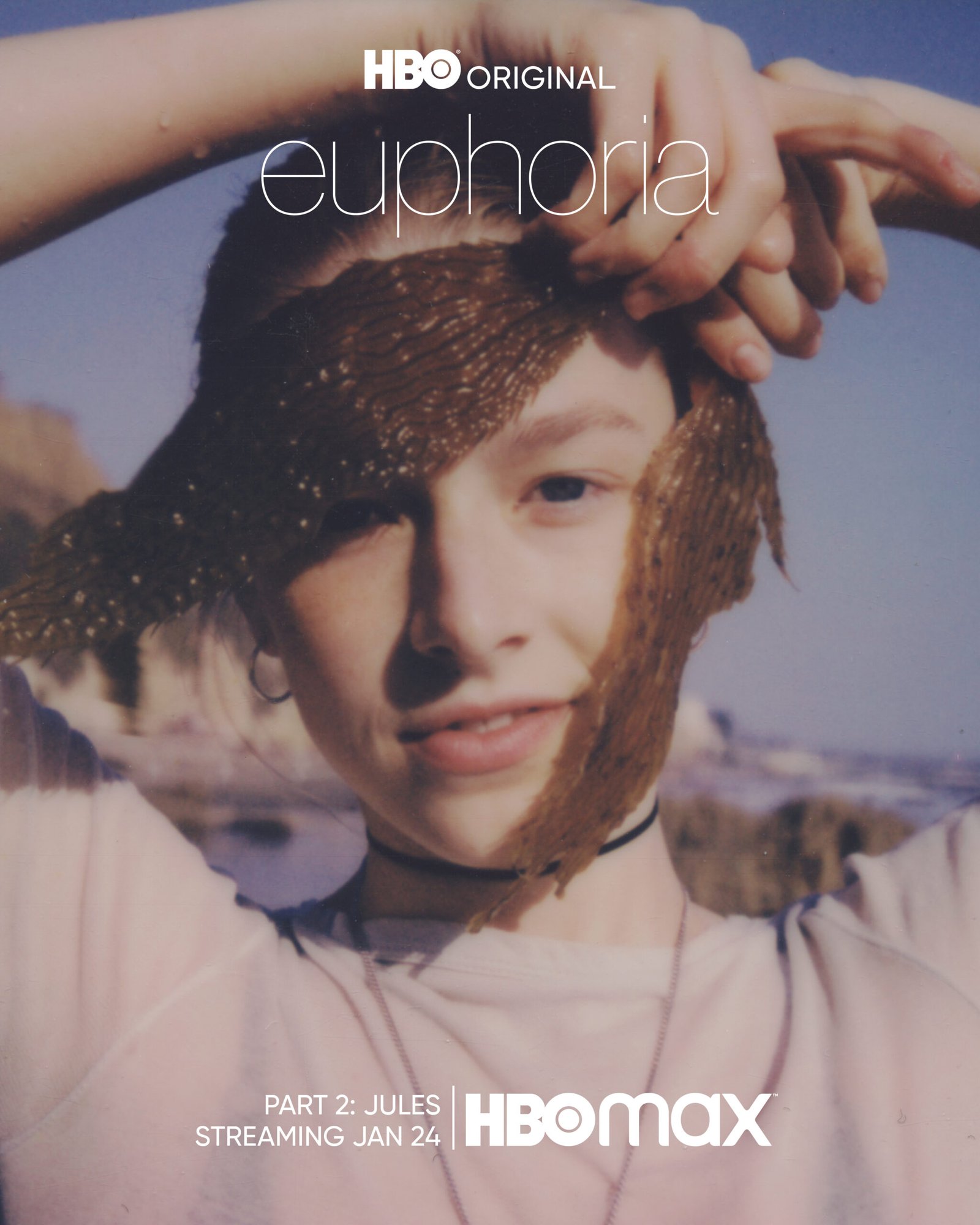
Image : © HBO / Warner Bros. Discovery – Euphoria (Press Kit)
Source: official teaser: YouTube – euphoria
An adolescence without filters or protection
Unlike traditional teen dramas, Euphoria rejects any form of idealization. The characters live in a world where adults are absent, ineffective, or overwhelmed, leaving teenagers alone to deal with serious issues such as addiction, mental health issues, sexual violence, and gender identity.
Rue, le personnage central, incarne cette solitude extrême. Narratrice instable et peu fiable, elle ne cherche jamais à se rendre sympathique. Son rapport à la drogue n’est ni glamour ni romancé : il est montré comme cyclique, destructeur et profondément banal. La série insiste sur cette répétition, soulignant que l’addiction n’est pas une ligne droite, mais une spirale.
An aesthetic that tells as much as the storyline
L’un des aspects les plus commentés de Euphoria reste sa mise en scène. Caméra flottante, éclairages néon, ralentis appuyés, musique omniprésente : la série adopte un langage visuel proche du clip ou de la publicité. Mais cette esthétique n’est pas gratuite. Elle traduit l’état émotionnel des personnages, leurs excès, leurs fantasmes et leur confusion permanente.
The episodes alternate between moments of pure stylization and almost documentary-like scenes, particularly when depicting depression, deprivation, or psychological abuse. This contrast reinforces the idea of a chaotic inner world, where beauty and ugliness coexist without hierarchy.
Sexuality, power, and gaze
Euphoria has often been criticized for its explicit portrayal of teenage sexuality. However, the series does not seek to shock so much as to question our relationship with the body in a society saturated with images. Through characters such as Cassie and Maddy, it shows how desire can become a bargaining chip, a tool for validation, or a means of emotional survival.
The series also depicts power imbalances, especially in romantic relationships. It highlights how social norms, social media, and pornography shape expectations, often to the detriment of self-esteem.
A generation under constant pressure
What Euphoria describes above all is a generation confronted with constant intensity: amplified emotions, constant social comparison, unlimited access to substances, images, and judgments. The characters never have the space to slow down or rebuild themselves in a lasting way.
In this sense, the series acts as a revelation. It does not claim to represent all young people, but highlights certain excesses of a system in which individuals are expected to be high-performing, desirable, and happy at all times, even when they are struggling.
An uncomfortable but necessary series
Euphoria divides, disturbs, and sometimes exhausts. But it is precisely this radicalism that makes it so powerful. By rejecting narrative comfort and reassuring morality, the series forces viewers to confront realities that are often invisible.
More than just a television phenomenon, Euphoria stands out as a generational work, imperfect but deeply memorable, which questions our relationship with youth, suffering, and the way fiction can or cannot represent them.
If you found this analysis interesting, check out our other TV series reviews, where we examine the trends, directing choices, and themes that characterize current series creation.
